
Checking Shock Pressure
Shock pressure should be 300psi, air or nitrogen. Nitrogen is preferred due to lower water content, but regular air can and will work in a pinch. It is important to measure with the wheels on the ground.
Keep on top of this! Low shock pressure can lead to inversion of the shock boots during use which will accelerate the failure of the shock.
If you want to use air, you can use any shock pump that is rated for at least 300 psi. The cheapest reliable one we have found is this one on Amazon. Typically, a larger pump is better, and a larger handle is better too, to save your hands. The chuck on the linked pump works fine. With other pumps, we recommend this no-loss chuck.
When you check shock pressure with your pump, it will typically lose approximately 100psi just from filling the hose and pressure gauge, as the shocks have very low air volume. Refill back to 300psi after checking. A future factory upgrade will include enlarged air reservoirs, which will reduce this effect and reduce maintenance intervals for the shock.
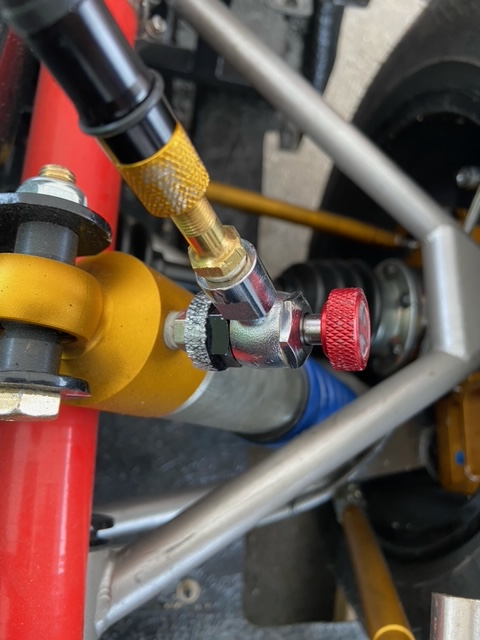
Checking pressure with no-loss chuck.
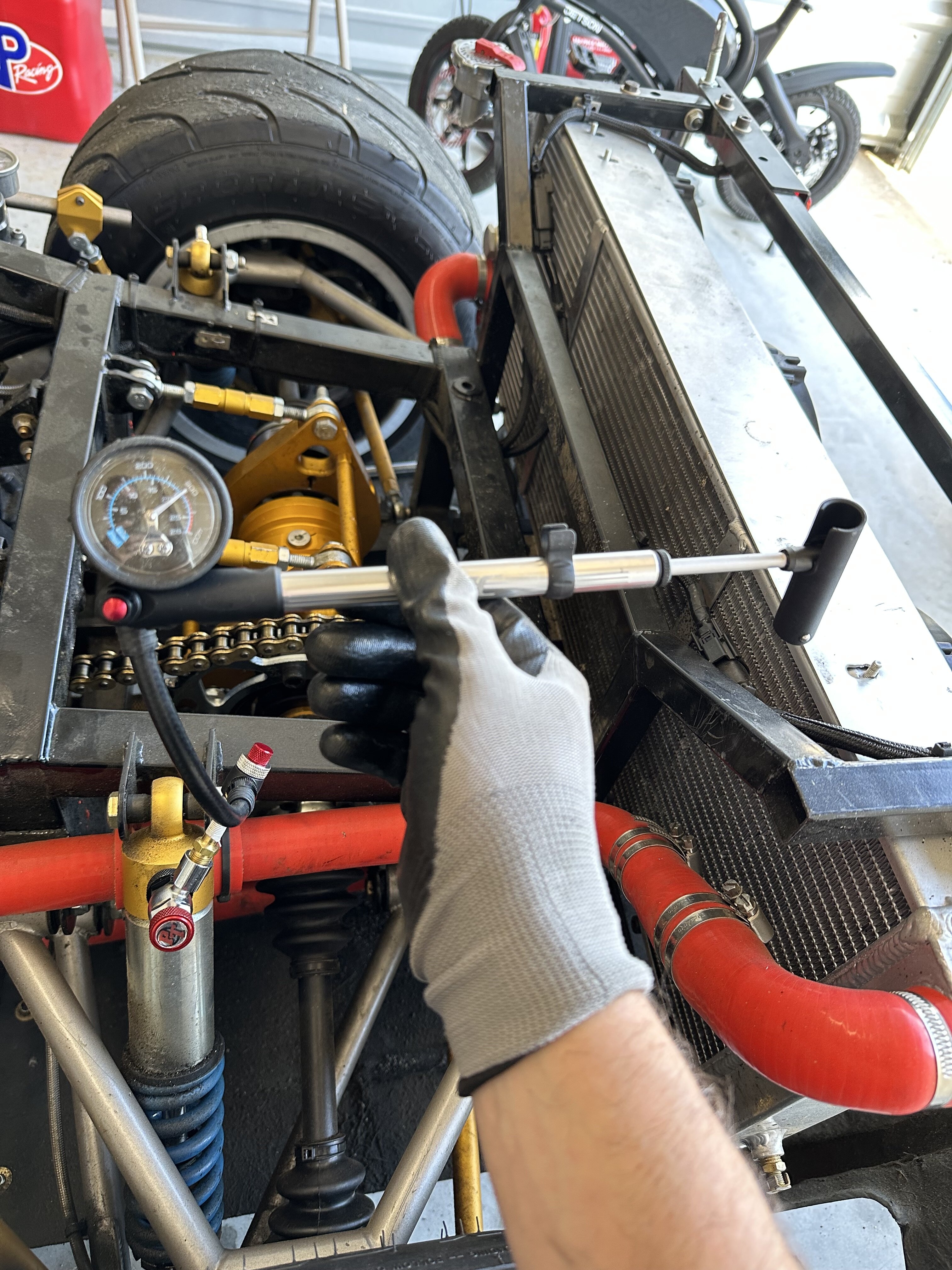
Checking shocks at 300psi with Amazon pump. The no-loss chuck is not necessary with this pump and was later removed.
Shocks that bleed down between weekends
Section titled “Shocks that bleed down between weekends”Shocks that will not hold 300psi from one event to the next are a known limitation of the current shock, not a sign that you have damaged them. You do not need to buy piggyback reservoir shocks to solve it.
Keep checking and refilling in the meantime, since running them soft is what inverts the boots and kills the shock.
The real fix is the Öhlins package, which will be generally available after GridLife Laguna Seca in September 2026. If bleed-down is costing you time every weekend, that is what to wait for. Ask your dealer about timing and pricing.